The Engagement Watch
By Barrington H.
Brennen, May 26, 2026
PDF
Format
 Since ancient Rome, rings have been worn on the
fourth finger on the left hand as a part of the
wedding ceremony and to symbolize eternal love.
It was believed that the fourth finger had a
“vena amoris” or “vein of love, that led to the
heart. Then came the engagement ring. Today,
this is worn to demonstrate a commitment and
intent to marry.
Since ancient Rome, rings have been worn on the
fourth finger on the left hand as a part of the
wedding ceremony and to symbolize eternal love.
It was believed that the fourth finger had a
“vena amoris” or “vein of love, that led to the
heart. Then came the engagement ring. Today,
this is worn to demonstrate a commitment and
intent to marry.
Have you ever heard about the engagement watch?
According to Wikipedia, “The 'engagement
watch' as a formal, modern proposal trend (when
a watch is given instead of a ring) gained
serious global popularity in the late 2010s to
early 2020s. However, the tradition of gifting a
watch as an engagement present has roots
stretching back to mid-20th-century Japan.”
Over fifty-one years ago, my wife and I got
engaged with a watch instead of a ring. There
were two reasons for this decision. First, the
denomination that I belonged to discouraged the
wearing of rings, and secondly, we did not have
the money to purchase a ring. However, it was
quite popular among young people I knew in the
1960s and 1970s in The Bahamas. How did we do
it? On the day of our engagement (when we
agreed to get married) I gave her my watch to
wear on her right hand. I was taught that
engagement watches are worn on the opposite
side. Also, if a new watch could be purchased,
they would both exchange watches. That means
the man would also wear the watch on the
opposite side. I thought it was a great symbol
at the time.
The practice of engagement or wedding watches
has a long history. At first, it was considered
quite a masculine gift for the husband or
husband-to-be. Wikipedia also states:
“Traditionally, the bride gives a prestigious
watch to her future husband as an engagement
gift. The wedding watch, considered as the
masculine jewel par excellence, has become a
tradition since the democratization of the
wristwatch at the end of the 19th century.”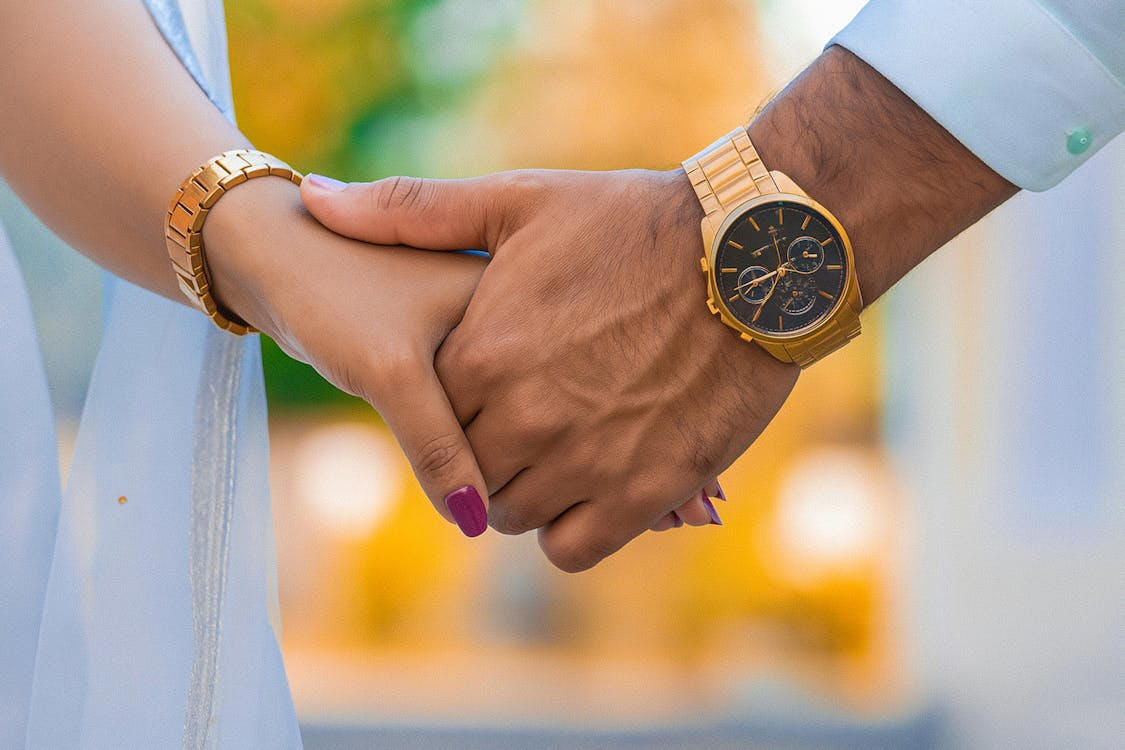
Let’s return to the use of the engagement
watch. Why an engagement watch? We are all
aware that the circle of gold or silver
represents the unbroken, forever love towards
each other. The watch represents the passing
of time and the promise of forever being
together. While a good watch today might not be
costly, many websites are promoting quite
expensive, beautiful engagement watches. Some
companies sell his and her engagement watches.
The cost is often quite manageable; similar to
rings, they can also be quite expensive. If a
couple focuses on symbolism more than being
ostentatious, the cost would not be prohibitive.
Note, I am not sharing this idea to oppose
engagement or wedding rings. I am simply giving
another option that many did not know they had.
Many years ago, I attended engagement parties
where watches were exchanged instead of rings.
I encourage today’s couple to think outside the
box. Start the tradition.
Here are three reasons one might choose an
engagement watch. First, it is a great symbol
of the promise of forever time to spend
together. Secondly, it might be very practical
for people with professions where a ring might
get in the way. Thirdly, the watch has a
function that makes it quite practical yet
symbolic.
Once again, here’s what to do. On engagement
day, the couple simply exchanges their watches
and wears them on the opposite side. Or they
may purchase a special watch for the engagement.
From now on, I will look for couples doing
this. This could be fun to watch. As stated
earlier, let’s start a new tradition.
What to do during the engagement period. As
mentioned in a previous article, engagement is
the time to prepare for the wedding day and
prepare for the marriage itself. Find a
qualified counselor or pastor who can take you
through the preparation process. Good
preparation would need at least seven to nine
sessions of counseling. Research tells us that
good pre-marriage counseling reduces divorce by
fifty percent.
I will close on this note. Several years ago, a
couple came to me for pre-marriage counseling.
I asked them if they were engaged. They didn’t
know if they were. I was confused. I asked
them if they had a date to marry, and they said
yes. Then I joyfully said to them, “You are
certainly engaged because engagement is a date
to marry.” Their faces brightened with joy.
They thought that the only time they could truly
say they were engaged to marry would be when
they purchased their engagement rings. They
could not afford costly rings, so I encouraged
them to get simple rings under $50 value and use
them as the rings. I also suggested that
they could exchange their watches and ware them
on the opposite side as a symbol of engagement. The next session, they came
back smiling and happy. Here is the caution.
Although it is good to have a ring or watch for
engagement, it is not morally or legally
required.
Barrington H.
Brennen is a marriage and family therapist.
Send your questions or comments to
question@soencouragement.org or call
1242 327 1980, or visit www.soencouragement.org