- Why So Many Divorces?
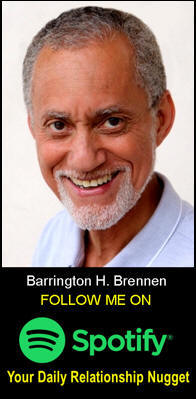
- By Barrington H. Brennen, August
21, 2002
After working with so many couples over the
years as a marriage and family therapist, I can list many problems in marriage
that lead to divorce. These may include infidelity, abuse, neglect, poor
communication, homosexuality, poor financial management, in-laws, sexual
impotency, poor physical health, alcohol and drug usage, and
"irreconcilable differences." When allowed to fester, these problems
bring pain in a relationship, leading to an eventual divorce. Are these problems
fixable? Are these really the reasons people get divorced.
- UNDERLYING REASONS
- Renowned writer and evangelist, Luis Palau, presents
these problems in a more philosophical way in his article "Five
Underlying Reasons for Divorce." Here are the reasons he gives:
1) Unreasonable
expectations. Couples expect completely unrealistic things from marriage. In
a word, they want total fulfillment. They expect marriage to meet all their
sexual, emotional, and personal needs and desires. Of course, such expectations
eventually lead to disaster.
2) Ungodly focus.
Palau says: "A marriage is in danger whenever the partners maintain a wrong
center of focus. Some focus on their spouses, others devote themselves to their
children, and many simply concentrate on themselves. The only truly satisfying
focus, however, is Jesus Christ."
3) Uncontrolled
passions. "One of our most uncontrolled passions is spending. We have
bought into the materialistic philosophy that says, "Get more out of
life." So we spend our lives trying to accumulate things, often to the
neglect of our marriages. Another uncontrolled passion is sensualism. We are
made callous by the immorality we see in print, on television, and in
movies."
4) Unforgiving
attitudes. Palau explains: "We’re all weak. We all fail. Our
marriages stand or fall depending on how we respond to our spouses’
shortcomings."
5) Unbiblical
presuppositions "Scripture, interestingly enough, connects marriage and
sexual intimacy with the most sacred relationship of all—our spiritual unity
with Jesus Christ. Marriage is an incredible metaphor of what it means to be
right with God. No wonder Scripture places such a high premium on faithfulness
and lifelong commitment within marriage."
We all can agree,
Christian or non-Christian, that Luis Palau is right. These are some of the
underlying reasons for divorce. If couples have the right approach toward
marriage and deal with their present difficulties, divorce can be avoided. But
once again, is it that simple?
- MARITAL SATISFACTION SPAWNS
DIVORCE
- To further complicate matters, I came
across a longitudinal study by a university sociology graduate that looks
at the reasons behind divorce. Anne Marenco’s study looked at this issue
by examining a survey from the second and third generation of respondents
over a period of 30 years. This sociology student looked at what triggered
divorce in couples who are facing marital dissatisfaction. Here are her
findings. The study revealed "that a higher education level often
increases the chance of divorce between a couple not happy with their
relationship. Such factors as the increased number of women with higher
education levels, more women entering the work force and wages that are
nearly equal between men and women, play an important role."
"What is even more surprising," states Marenco, "is the
discovery that those who are more religious and attend church regularly
are more likely to divorce when they are less satisfied with their
marriage.
The report also showed
that conflicting personal beliefs play a significant role when unhappy couples
divorce. Marenco found that individuals who believe in a more traditional
marriage relationship are more likely to divorce when their partner believes in
a more contemporary marriage. The difference in opinions could lead to the
couple becoming dissatisfied with their own marriage.
The final point from the
report was that the more children a couple has, the higher the likelihood of
divorce. With the addition of children, what began as a two-way relationship
becomes a six-way relationship when only two children are added. The more
children included, the more complicated a couple’s life becomes.
- MY OBSERVATIONS
- As a counseling psychologist who
works with relationships daily, I have to help couples and individuals
work through these problems and many more. I’ve come to the conclusion,
though, that divorce in the majority of cases (90 percent) is avoidable.
This brings me to my findings why people get divorced. The real reason for
divorce is not the presence of a particular problem in a relationship, but
the refusal for one or both partners to cooperate and work together to
bring healing. Here is what I have observed are the fundamental reasons
for at least 90 percent of divorces today.
- 1) Traditionalism. I’ve
discovered that no matter how simple or complicated the problem might
be, one of the toughest roadblocks is when a partner refuses to examine
her traditional way of doing things, thus causing a stalemate on
progress towards healing. For example, when a husband refuses to give
more affection to his wife even when she tearfully begs him to do
so.
-
- 2) Selfishness. Hurting
spouses can become very narcissistic. Everything must be for their
benefit and no one else. Their thinking process is blocked by their
personal pain and selfishness diminishing wise judgment.
-
- 3) Stubbornness and Pride.
Sometimes a hurting partner refuses to change, open his mind, come to
counseling session, admit her part in the weakening of the relationship.
He is just stubborn and proud. She refuses to eat a slice of the humble
pie. What can the other partner do, but divorce the uncooperative
spouse? I’ve observed that these are the real reasons for divorce, not
the specific problems.
-
LOST COIN SYNDROME
I can best explain my observations by
referring to the lost coin parable found in John 15. The lost coin is the
shortest of the three parables in the chapter. However, it presents the
greatest dilemma of all. Let me explain. This life application of the
three parables is not a theological explanation of the passage.
The lost sheep did not
plan to get lost. It wondered away unknowingly but finally realized it was lost
and cried for help. This parable represents those couples who are willing to get
help and find healing within reach.
The lost son in Luke 15
made a decision to get lost. From the beginning he knew he was lost, although he
thought he could rough it out on his own. However, he finally called for help
and found personal healing. This parable also represents those couples who are
having a great difficult time in marriage, but after much prayer, coaching, and
counseling, they finally find peace and healing.
The lost coin did not know
it was lost and did not cry for help. This parable represents those partners in
relationships who refuse to admit they are wrong, or who act like they
"know it all," and who hold on to tradition even when it is breaking
the marriage apart. They are unteachable. Sometimes, it is only through a
serious tragedy or loss in their lives that individuals may come to their
senses, and often it’s too late. I call this the lost coin syndrome.
My observations is that
the lost coin represents about 90 percent of the divorces today; that is, when
one party just refuses to change, admit her wrong, and eat a slice of humble
pie. This is what makes divorce inevitable: Traditionalism, selfishness,
stubbornness, and pride.
- GET ON YOUR KNEES
- Then it is obvious, if hurting couples
would sit at the table of humility and swallow their pride, at least 90
percent of all potential divorces could be avoided. If wounded couples would
allow the warmth from a loving and caring Jesus to melt their ice cold
hearts, healing would be possible. I’ve also observed in sessions that
even when a spouse who did not "cause the problem" refuses to work
alone with the one who did cause the pain, couple healing is impossible. The
one who did not cause the pain would say, "that’s your problem not
mine." When there is pain in a relationship caused by one or both
partners, healing can only take place if both get on their knees and seek
forgiveness.
Barrington H. Brennen, MA, NCP, BCCP, is a
marriage and family therapist and board certified clinical
psychotherapist, USA. Send your questions or comments to barringtonbrennen@gmail.com or
write to P.O. Box CB-13019, Nassau, The Bahamas, or visit www.soencouragement.org
or call 242-327-1980 or 242-477-4002.