Mental Health After a Hurricane
Compiled and written
by Barrington H. Brennen, 2004, 2009, 2011, 2016, 2019
Click Here to Download and Print PDF Format Handout 8x14 tri-fold
Print and distribute in your community,
institution, school, church, business.
 |
|
Barrington H. Brennen |
|
A LITTLE HISTORY
[ Go Directly to Article ]
Hurricanes have been hitting The Bahamas for hundreds of
years. We can never get use to them. They are always
painful
1929:
In 1929 there was a major hurricane that hit Andros.
Here's what Wikipidia states:
"The 1929 Bahamas Hurricane (also known as the Great Andros
Island Hurricane) was the second hurricane and the only
major hurricane during the very inactive 1929 Atlantic
hurricane season. The hurricane was the only hurricane to
cause any significant damage, resulting in $676,000 (1929
USD, $7.3 million 2005 USD) in damage. Only a year after the
1928 Okeechobee hurricane, the hurricane caused only three
deaths in southern Florida, a low number due to
well-executed warnings.[3] The hurricane was much more
severe in the Bahamas, where damage was near extreme due to
the hurricane stalling over the area for an extended period
of time. There, the hurricane caused 48 deaths."
In 1983, while living on Crooked I land, I had an interview
with Harry McKinney who survived hurricane. He told me
how terrible was the hurricane. There was a king tide
and very strong surges. He expressed it this
way: "A tidal wave came and wash right through
Landrail Point pushing home, debris, and people way in
land." He said that one man was left hanging in a tree
over one mile in land.
1932:
In 1932
there was a major hurricane that hit Abaco.
"The 1932 Bahamas hurricane, also known as the Great Abaco
hurricane of 1932, was a large and powerful Category 5
hurricane that struck the Bahamas at peak intensity. The
fourth tropical storm and third hurricane in the 1932
Atlantic hurricane season, it was also one of two Category 5
hurricanes in the Atlantic Ocean that year, the other being
the 1932 Cuba hurricane. The 1932 Bahamas hurricane
originated north of the Virgin Islands, became a strong
hurricane, and passed over the northern Bahamas before
recurving. The storm never made landfall on the continental
United States, but its effects were felt in the northeast
part of the country and in the Bahamas, especially on the
Abaco Islands, where damage was very great. To date, it is
one of only four Category 5 Atlantic hurricanes to make
landfall in the Bahamas at that intensity, the others having
occurred in 1933, 1992, and 2019. . . 16 people were
reported killed, along with an additional 300 injured.
This entire toll occurred in the Bahamas, notably on and
around Abaco Island; damage estimates in dollars, however,
were not released." Wikipedia
2019: In
2019 another dangerous hurricane hit Northern Bahamas--Abaco and
Grand Bahamas.
WHEN DO HURRICANES OCCUR IN THE ATLANTIC
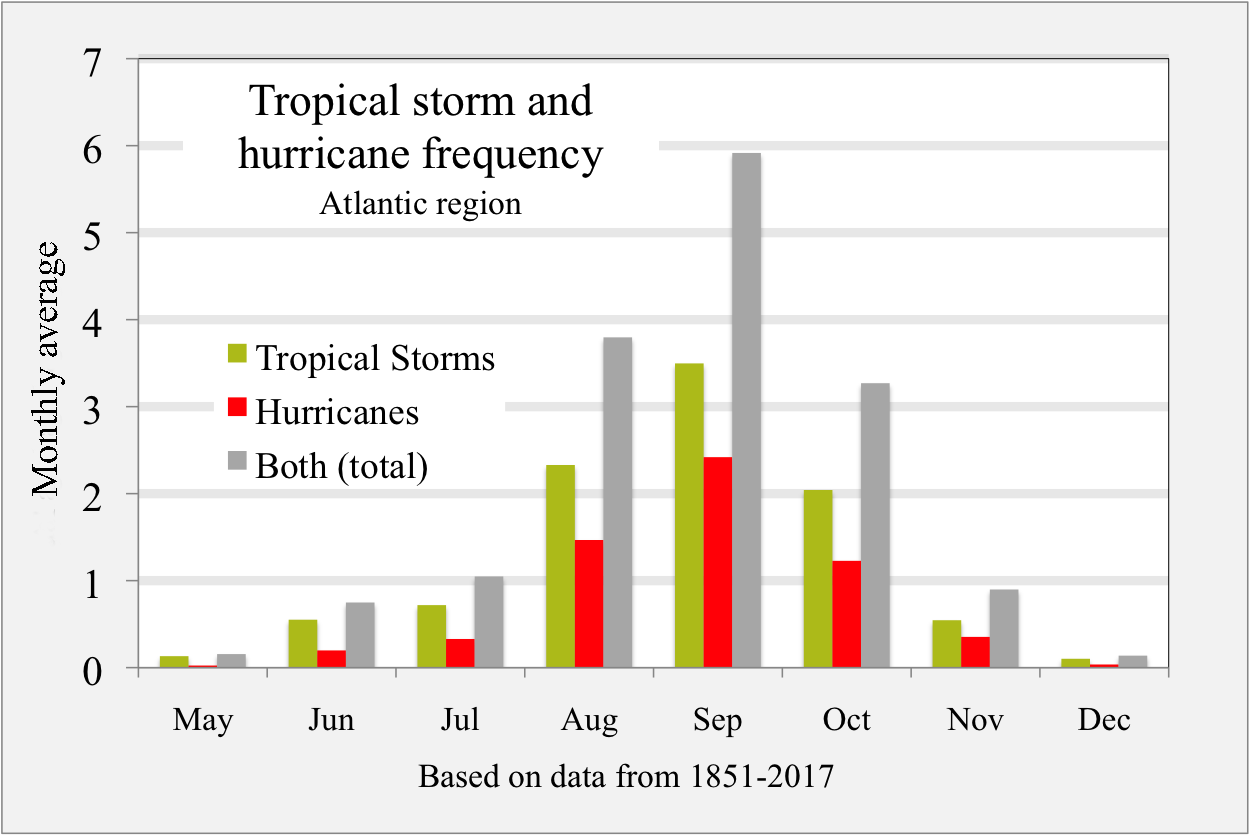
The
following chart will help us understand the frequency of
hurricanes and during which months since 1851 to 2017
(Wikipedia). Note that the month with the most hurricanes
is September.
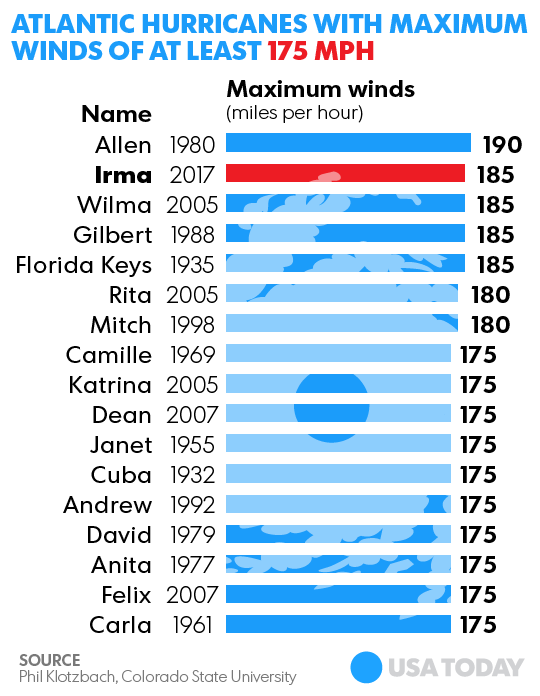
Below is a
cart of Atlantic Hurricanes with maximum winds of at least 175
MPH. Now we will add Hurricane Dorian. The source is
listed in the graph.

After a Hurricane
[
Handout ]
What to Expect? What to
Do?
What Not to Do?
Hurricanes are very stressful events.
All unplanned events that bring uncertain change in our lives,
called crises, are always stressful. Hurricanes affect all of us
in some way or another. Every member of the family will
experience some form of negative response to a hurricane over
the next few days and months after it passes. The signs of
post-hurricane trauma are not always immediate; the emotional
effects may not appear for months. Recovery time varies as well.
Stress takes its toll not only on those hit directly by the
hurricane, but also on those who made it through physically
untouched by the hurricane. Mental health experts say that those
who escaped the hurricane untouched often suffer "survivor's
guilt.''
People suffering survivor's guilt often push themselves to the
limit trying to help. Children, in particular, resent the
shattering of their routine. That resentment may manifest itself
in enormous guilt, nightmares, temper tantrums and problems at
school.
What’s important in dealing with trauma after the storm is to
understand that there is a natural grieving process -- denial,
questioning, acceptance and recovery -- after the loss of
normalcy, loved ones, and property.
MENTAL HEALTH
A
research was done in 2007 to document changes in mental and
physical health among 392 low-income parents exposed to
Hurricane Katrina and to explore how hurricane-related stressors
and loss relate to post-Katrina well being. The research
team consisted Jean Rhodes and Christian Chan from University of
Massachusetts, Christina Paxson and Cecilia Elena Rouse from
Princeton University, Mary Waters from , Harvard University and
Elizabeth Fussell from
Washington State University. The title of the research is
"The Impact of Hurricane Katrina on the Mental and Physical
Health of Low-Income Parents in New Orleans."
Briefly the research results indicated:
"The prevalence of probable serious mental illness
doubled, and nearly half of the respondents exhibited
probable PTSD. Higher levels of hurricane-related loss
and stressors were generally associated with worse
health outcomes, controlling for baseline
socio-demographic and health measures. "
It is
clear readers, that there can be major effects to our
emotionally well-being after a major hurricane.
It is imperative the individuals who experienced loss during a
hurricane should take note. Here are a few
points to consider.
What Are Some of the Responses After a Hurricane?
TOP
-
Fear, disbelief, suspicion, anger, anxiety, or
apathy.
-
Short temper, moodiness and irritability.
-
Reluctance to abandon property.
-
Guilt over having been unable to prevent the
disaster.
-
Confusion, numbness, and flashbacks.
-
Difficulty in making decisions.
-
Excessive helpfulness to other disaster victims.
-
Loss of appetite.
-
Crying for no apparent reason.
-
Increased effects from allergies, colds, and flu.
-
Rejecting outside help or feeling disappointed
with outside help.
-
Isolation from family, friends, and social
activities.
-
Domestic violence.
How Can Adults Cope? What Should You Do?
We cannot avoid stress, but we can learn to manage it or how to
respond to the stressors. Here are a few suggestions:
-
Recognize and accept your feelings -- and realize
you're not alone.
-
Talk to others, including family, friends or
clergy, about your feelings.
-
Be patient--accept that restoring your life to
normalcy will take time.
-
Keep family meals as nourishing and on as much of
a routine as possible.
-
Get as much sleep as possible.
-
Relax--a deep breath and vigorous stretch help
reduce tension and stress.
-
Whenever possible, do something enjoyable--read a
book, watch a video, play games.
-
Walk or jog.
-
Hug your family and friends--affection and
touching can be soothing.
-
If your stress symptoms persist, seek
professional help
How Do Children Deal With Stress, Especially After a Hurricane?
Here are some of the
signs of stress in children:
-
Head and stomach aches
-
Reluctance to go to bed
-
Insomnia and recurring nightmares sparked by fear
that the hurricane will return
-
Regressive behavior such as bed-wetting,
thumb-sucking and clinging to parents
-
Fantasies that the hurricane never happened
-
Withdrawal
-
Temper tantrums, crying, and screaming.
-
Shortened attention span, plummeting school
performance, or refusal to attend school
-
Loss of appetite
-
Loss of interest in playing
-
Drug and alcohol use by older children
What Can Parents or Adults Do to Help Their Children Cope?
TOP
-
Do not let your children repeatedly watch video or photos on
the television about the disaster or
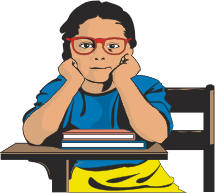 traumatic event. This can elevate the stress.
Turn off the television when the news of that event comes
on. Read more or this at the end of this
section
traumatic event. This can elevate the stress.
Turn off the television when the news of that event comes
on. Read more or this at the end of this
section
-
Like you, children are scared. Understand their
fears--real or imagined--and reassure them they are safe.
Extra attention and hugs are important.
-
Allow children to express their feelings in
conversations, drawings, or activities. Children sometimes
think scary things will go away if they block them out.
-
Share your feelings with your children; let them
know their feelings are normal.
-
Answer questions thoughtfully. Take extra time to
make sure the explanation is simple and open for discussion.
-
Be patient.
-
Let children know they are not responsible for
the disaster. Tell them how being a prepared member of the
family helped everyone feel safe.
-
Allow children to help in the cleanup. Children
who feel they belong are likely to feel more self-assured.
-
Give extra doses of praise for good behavior.
-
Resume your normal routine as quickly as
possible. Provide the same snacks you used to. Make time for
family activities such as playing games.
-
Encourage children to help those less fortunate
than themselves. Allow them to prepare food, clothing and
other items for donations.
-
If your children continue to show stress signs,
seek professional help. Your children's stress may be more
than you can handle.
|
Children and Traumatic Events
The repeated viewing of violent and horrific
TV, Internet and newspaper images of
traumatic events can upset them, and
negatively affect the way they feel, behave,
and perform in school. (This
information is taken from LifeNet
NYC for Children)
Know how children understand disturbing news
images:
Ages Six and Younger
-
Believe that what they see on
television is happening live; while
they are watching it.
-
Think that a traumatic event is
happening over and over again when
they see repeated images of it.
-
Find images of people suffering,
crying, or being attacked very
upsetting.
Ages Seven to 12
-
Understand that the news is only
made up of reports about events that
have already happened.
-
Find disturbing media images
upsetting.
-
May become anxious for their own and
their family’s safety.
Ages 13 and Older
-
They can be scared and horrified by
the same things as younger children.
-
They can become deeply worried and
anxious for their own and their
family’s safety and future.
-
They may want to know why the bad
things they see on the news are
happening.
|
|
TOP
When Helping Someone
Impacted by a Disaster
Do's
and Don'ts
Things Not to Say Updated
September 2019
These are insensitive states that
pushed the digger of emotional pain even further into the heart
of the victim
-
“It
could have been worse.” When some has been seriously
injured with a broken leg, has lost his entire belongings,
and does not know where his mother is, this statement is
insensitive and pushes a digger into his heart once again.
-
“Let’s
pray about it.” Note that the first need is not
always prayer, it is removal from the disaster area, food,
water, clothing. If you say "Let's pray about it" and
walk away, not offering help, you are exasperating the
person's pain.
-
“I
understand” or “I know what you are going through”
Unless you have actually been through the exact experience,
this is not wise to day. In general, it is best not to
use these statements.
-
“God
knows best.” This also in insensitive statement.
It compounds the emotional state of the person who is
already have doubts about God. It also places the
blame for the pain right at His feet.
-
“We are
only alive because of God’s goodness and mercy.”
This statement also causes confusion for many.
What about those "Godly" persons who perished in the
hurricane? Did they experience God's mercy before they
died.
-
Run far
away from the idea that the "hurricane is a punishment for
the sins of the people." This is far from truth.
Once again this statement is blaming God, who is not the
author of pain and misery.
Things
Not to Do Taken from Psychological
First Aid Training Manual
-
Don’t pressure someone to tell
their story.
-
Don’t interrupt or rush
someone’s story (for example, don’t look at your watch or
speak too rapidly).
-
Don’t touch the person if
you’re not sure it is appropriate to do so.
-
Don’t judge what they have or haven’t done, or how they are
feeling.
-
Don’t say: “You shouldn’t feel that way,” or “You should
feel lucky you survived.”
-
Don’t make up things you don’t know.
-
Don’t use terms that are too technical.
-
Don’t tell them someone else’s story.
-
Don’t talk about your own troubles.
-
Don’t give false promises or false reassurances.
-
Don’t think and act as if you must solve all the person’s
problems for them.
-
Don’t take away the person’s strength and sense of being
able to care for themselves.
-
Don’t talk about people in negative terms (for example,
don’t call them “crazy” or “mad”).
Things to Do
Taken
from Psychological First Aid Training Manual
-
Try to
find a quiet place to talk, and minimize outside
distractions.
-
Respect
privacy and keep the person’s story confidential, if this is
appropriate.
-
Stay near
the person but keep an appropriate distance depending on
their age, gender and culture.
-
Let them
know you are listening; for example, nod your head or say
“hmmmm….” Be patient and calm.
-
Provide
factual information, if you have it. Be honest about what
you know and don’t know. “I don’t know, but I will try to
find out about that for you.”
-
Give
information in a way the person can understand – keep it
simple.
-
Acknowledge how they are feeling and any losses or important
events they tell you about, such as loss of their home or
death of a loved one. “I’m so sorry. I can imagine this is
very sad for you.”
-
Acknowledge the person’s strengths and how they have helped
themselves.
-
Allow for
silence
Further
Steps to Take
Here’s are a few steps one can take to help restore emotional
well-being and a sense of control in the wake of the hurricane
or other traumatic experience. These steps were prepared by the
American Psychological Association and I thought can be help for
us in The Bahamas.
-
Recognize that this is a challenging time but one that you
can work to manage. You've
tackled hardships at other times in your life. Tap into the
skills you used to get through past challenges.
-
Allow yourself to mourn the losses you have experienced. Recognize
that you may experience a variety of emotions and their
intensity will likely less over time.
-
Take a news break. Watching
replays of footage from the hurricane can make your stress
even greater. Often, the media tries to interest viewers by
presenting worst case scenarios. These may not be
representative of your home or community.
-
Ask for support from
people who care about you and who will listen and empathize
with your situation. But keep in mind that your typical
support system may be weakened if those who are close to you
also have experienced or witnessed the hurricane.
-
Find ways to express yourself when ready. Communicating
your experience through talking with family or close
friends, keeping a diary, or other forms of self-expression
may be a source of comfort. Find out about local support
groups led by appropriately trained and experienced
professionals. Support groups are often available in
communities following large-scale disasters. People can
experience relief and comfort connecting with other
hurricane survivors who have had similar reactions and
emotions. These can be especially helpful for people with
limited personal support systems.
-
Engage in healthy behaviors to enhance your ability to cope
with excessive stress. Eat
well-balanced meals and get plenty of rest. If you
experience difficulties sleeping, you may be able to find
some relief through relaxation techniques. Avoid alcohol and
drugs since these can increase a sense of depression and/or
impede you from doing what is necessary to be resilient and
cope with events.
-
Establish or reestablish routines such
as eating meals at regular times and following an exercise
program. Take some time off from the demands of daily life
by pursuing hobbies or other enjoyable activities.
-
If possible, avoid
major life decisions such as switching jobs
because these activities tend to be highly stressful.
TOP
WHAT IS MOST VALUABLE?
One thing most people learn after such a national disaster like
a hurricane is that life is more valuable than material
possessions. While we do love our material possessions, these
things can be easily replaced. Sometimes major disasters helps
us to realize that we really do not need certain things, or it
helps us to put things in proper perspective. One man last
week was miserable because since there was no electricity and
running water in his home after the hurricane the heat in his
home became very unbearable. It was frustrating he said. He
began to complain and became very restless. However, after
driving around the island visiting friends and neighbors and
observing their loss and damage, he realized that he did not
have much loss as compared to others. Suddenly his complaining
turned in to a spirit of thankfulness and a sense of peach. The
house was no longer hot. It is imperative that we put our
personal loss into perspective. It’s a healthy way of coping.
Here are scripture passages that may motivate you during this
time:
-
Psalms 46
-
Psalms 23
-
Lamentation 3:32
-
Psalms 103:3-18
-
Psalms
139:9-10
-
Romans 8:18
-
Romans 8:31-39
|
-
Psalms 55:22
-
2
Corinthians 1:3-4
-
Matthew 6:25-34
-
Philippians 4:6-7
-
I Peter
5:6-7
-
Proverbs 12:25.
|
Dear friends, you need not go through the pain of loss all
alone. Contact someone you can talk to. A counselor, pastor, friend, or
relative. If your stress signs linger long or are currently
unbearable, then seek professional help. Go the
Bahamas
Psychological Association website and click on button "List
of Psychologists" at the top of the page.
Barrington Brennen is a counseling psychologist, marriage and
family therapist and board certified clinical psychotherapist
and Nationally Certified Psychologist, in
the USA. Send your questions to
question@soencouragment.org or call 242-327-1980 or visit
www.soencouragement.org
TOP